

BegonianExpress
Begonia darthvaderiana
Begonia darthvaderiana
Couldn't load pickup availability
All of our seeds are hand-pollinated by us in Quebec, Canada to ensure pure, true-to-species stock. Germination rates are retested every few months.
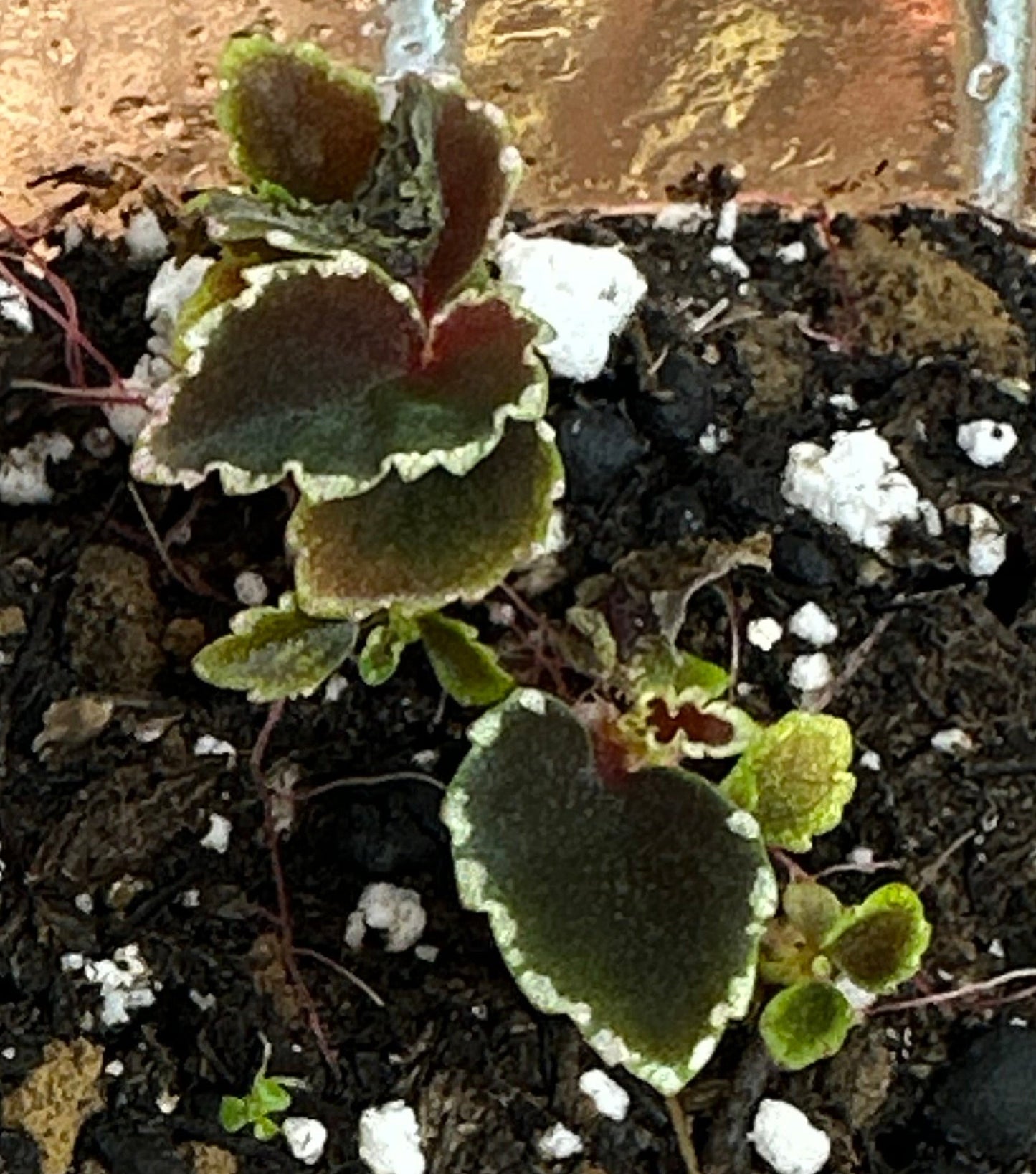
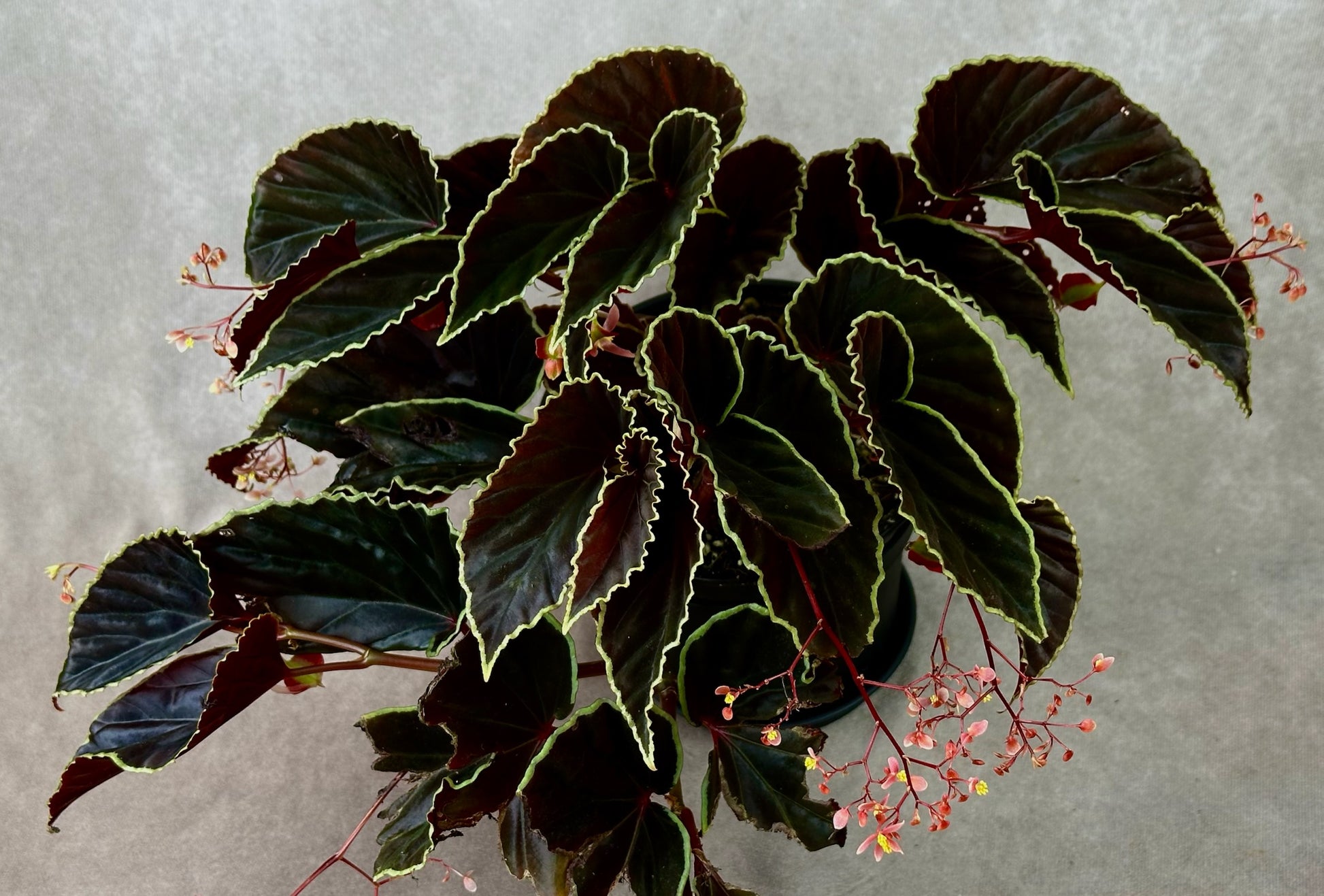
Listing is for 20+ Begonia darthvaderiana seeds. These are pure species darthvaderiana, not hybrid seeds! Very few seeds available of this famous diva from Borneo. Since its discovery in 2013 it has become famous as much for its quirky latin name as for the challenge it gives even experienced begonia growers of keeping it healthy for any length of time. Germination rate tested over 50% at 3 weeks.
View our begonia seed sowing guide here
View our begonia seed sowing guide here
Now that you've got your begonia seeds, what to do with these dust-sized specks?

Photo: roughly 30 begonia seeds on a sheet of paper next to a metric ruler
1. Begonia Seed Inspection
Whether you've just received seeds in the mail or opened your first seed pod, the first thing you will want to do is check their overall condition. You will need 2 pieces of regular printer paper. It is recommended to do this indoors, turning off any fans and reducing any air current which could cause the tiny seeds to scatter. Carefully open the seed packet (or ripe seed pod) over the middle of a sheet of paper. Healthy begonia seeds should roll easily when the paper is tilted.
video: the contents of an entire pod of begonia seeds is rolled on a piece of paper
Healthy begonia seeds are also brown-to-golden in colour and barrel shaped, although it is normally quite difficult to discern this with the naked eye. A jeweller's loupe can be an invaluable tool, and is easy to find online for under $20. We recommend 30x magnification, and perhaps most importantly, the loupe should have an integrated light.
Slowly roll the desired quantity of seeds from one sheet to the next, and return the remaining seeds to the original paper. Store in a cool, dry place to prolong viability. If you don't plan to sow within a couple of weeks, keep the packet in the fridge, sealed in a small jar or zip bag so it stays dry; months at room temperature will noticeably cut germination.
2. Begonia Seed Sowing Container
The best containers for sowing begonia seeds are small, shallow, and air-tight. If it is microwaveable, you can sterilize your substrate at the same time. Tupperware is a good choice. Clean it well with soap and hot water before use to reduce the chance of spore contamination.

photo: a suitable container for germinating begonia seeds
3. Begonia Seed Sowing Media
You have a few choices when it comes to media for sowing begonia seeds! We will go through the pluses and minuses of a few common substrates here.
Organic/soil: Soil is the classic, easy-to-find medium that readily provides nutrition to freshly sprouted seedlings. However due to its nutritious nature, soil also promotes the most common problem for young begonia seedlings - damping off. If you want to use organic media such as peat or coir, it is highly recommended to sterilize it in the microwave before use to kill any algae or mould spores.

photo: begonia seeds germinating on soil
Akadama: If you are feeling more adventurous or have had problems sowing on soil in the past, you may want to consider an inorganic media such as akadama. The advantage to akadama is that due to its porous nature, more air is provided to the roots of seedlings and damping off is far less likely. The disadvantage to akadama is it contains very little nutrition for seedlings, so early transplantation, or using a liquid fertilizer once seedlings have sprouted, is advised.

photo: begonia seeds germinating on akadama
Aquarium Stratum: Stratum aka "aqua soil" is slightly more prone to algae than akadama, but still provides plenty of aeration to roots and contains more nutrients to help seedlings get their start.

photo: begonia seeds germinating on Fluval Stratum
A note on sphagnum moss though: we don't recommend it for begonia seed, except for some African epiphytes (noted on the product page). The tiny seedlings are very well camouflaged against the moss and hard to spot even when they're sitting right on the surface, some also slip down between the strands where they don't get the light they need to germinate, and if the moss isn't sterile it can introduce hitchhiker spores and seeds that sprout into odd non-begonia surprises.
4. Water for Begonia Seed Germination
The very best water for your begonias happens to also be the most ecological. Rain water is extremely pure, but not stripped of all nutrients as is the case with distilled water. If you don't have any way to capture rain or snow, distilled water is the next best option. Reverse osmosis water is also fairly reliable, followed by filtered tap water.
5. Sowing Begonia Seeds
Pre-moisten and sterilize your substrate and container. Form a slide with the paper sheet, and tap to roll the seeds onto the surface of the media. Try to space them out evenly so the seedlings won't be bunched together when it comes time to transplant them. Begonia seeds are unusual in that they require light exposure to germinate, so it is very important that they not be covered or buried! Close the lid of your container and do not open unless the substrate needs to be watered.
6. Heat and Light for Begonia Seed Germination
Place your container in a warm (22 degrees Celsius and up) and bright location, that gets at least 12 hours of diffused light per day. A small number of high-elevation species actually prefer cooler conditions and can stall in warmth; if your species is one of these exceptions, its product page will say so. Only open your seed container if it needs to be watered, and avoid watering directly over the seeds or seedlings. In our own germination tests with fresh seed, most species sprout in 2 to 4 weeks, and a few in under a week. Shipping, storage, and sowing conditions can stretch this considerably, so give a sowing up to 3 months before drawing conclusions, and a handful of naturally slow species take even longer. Happy growing!
A word on heating mats: without a thermostat they run unchecked, and a closed container sitting on one can climb well past 30 degrees Celsius, which is too warm for most begonias and will cook the seed before it ever germinates. If you use a heat mat, plug it into a thermostat controller: an inexpensive plug-in box with a temperature probe, sold anywhere heat mats are, that works with any heat mat and switches it off once the container reaches the temperature you set. Otherwise skip the heat mat and rely on a warm room.
Please note: germination results depend a great deal on how seeds are stored, handled, and sown once they reach you, so we can't guarantee an individual success rate. We're always glad to help troubleshoot, and we do replace seeds where a restitution is warranted. Our full germination policy and care notes explain this in more detail.